In a large mixing bowl, combine the bread flour, sourdough starter, and 385g of the water (about 1⅔ cups).
Mix until no dry flour remains and a shaggy dough forms. Cover the bowl and let the dough rest for 1 hour at room temperature. This resting period allows the flour to fully hydrate and begins gluten development.
Step 2: Add the Salt
Dissolve the salt in the remaining 30g water (about 2 tablespoons).
Add the salt-water mixture to the dough and mix thoroughly until fully incorporated.
Step 3: Add the Olive Oil
Pour the olive oil over the dough and continue mixing until it is completely absorbed. The dough will become smoother and more elastic.
Step 4: Bulk Fermentation
Transfer the dough to a lightly oiled container and cover.
Allow the dough to ferment at room temperature for approximately 6 hours, or until it has noticeably expanded and shows signs of active fermentation.
During this time, you may perform 2–3 sets of stretch-and-folds during the first few hours to strengthen the dough and improve structure.
Step 5: Cold Fermentation
Cover the container tightly and place it in the refrigerator overnight, or for 12–16 hours.
The cold fermentation develops deeper flavor and improves the dough's texture.
Step 6: Shape the Fougasse
The next day, remove the dough from the refrigerator and allow it to rest at room temperature for 30–60 minutes.
Transfer the dough onto a lightly floured surface and gently shape it into a large oval, approximately 12–14 inches (30–35 cm) long.
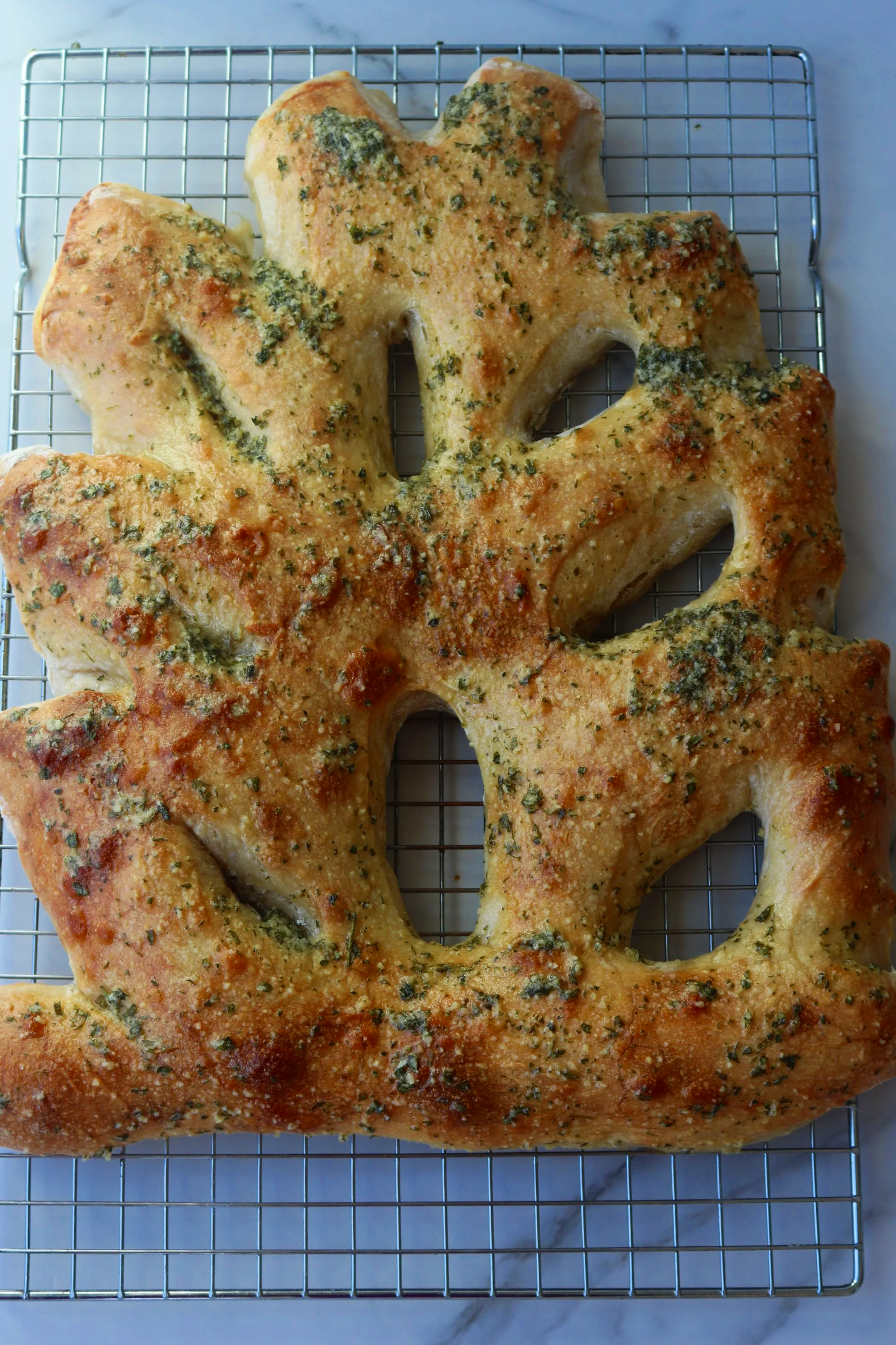
Using a sharp knife, bread lame, or pizza cutter, make one long cut down the center of the dough, leaving both ends connected. Make several diagonal cuts on each side to create a leaf pattern.
Gently stretch each opening with your fingers so the cuts remain open during baking.
Transfer the shaped fougasse to a parchment-lined baking sheet.
Cover lightly and let rise for 1–2 hours, until slightly puffy.
Step 7: Bake
Preheat the oven to 420°F (215°C).
Brush the dough lightly with olive oil and sprinkle with any desired toppings.
Bake for 25–30 minutes, or until the crust is golden brown and crisp.
Step 8: Cool and Serve
Transfer the bread to a wire rack and allow it to cool for at least 15 minutes before serving.
Enjoy warm with olive oil, cheese, soups, or Mediterranean dishes.
Baker's Notes
An active and bubbly starter will produce the best rise and flavor.
The decorative cuts should be stretched open before baking to maintain the classic fougasse appearance.
For a Middle Eastern-inspired variation, top with za'atar, sesame seeds, nigella seeds, and a drizzle of olive oil before baking.
This bread is best enjoyed the day it is baked but can be stored in an airtight container for up to 2 days.